THE ART OF LOOKING AGAIN

Find the strange
in the familiar.

A beginner’s field guide to liminal photography. Learn to turn an ordinary, in-between place into a frame that holds a question.

NO SPECIAL CAMERA. NO ABANDONED BUILDING REQUIRED.

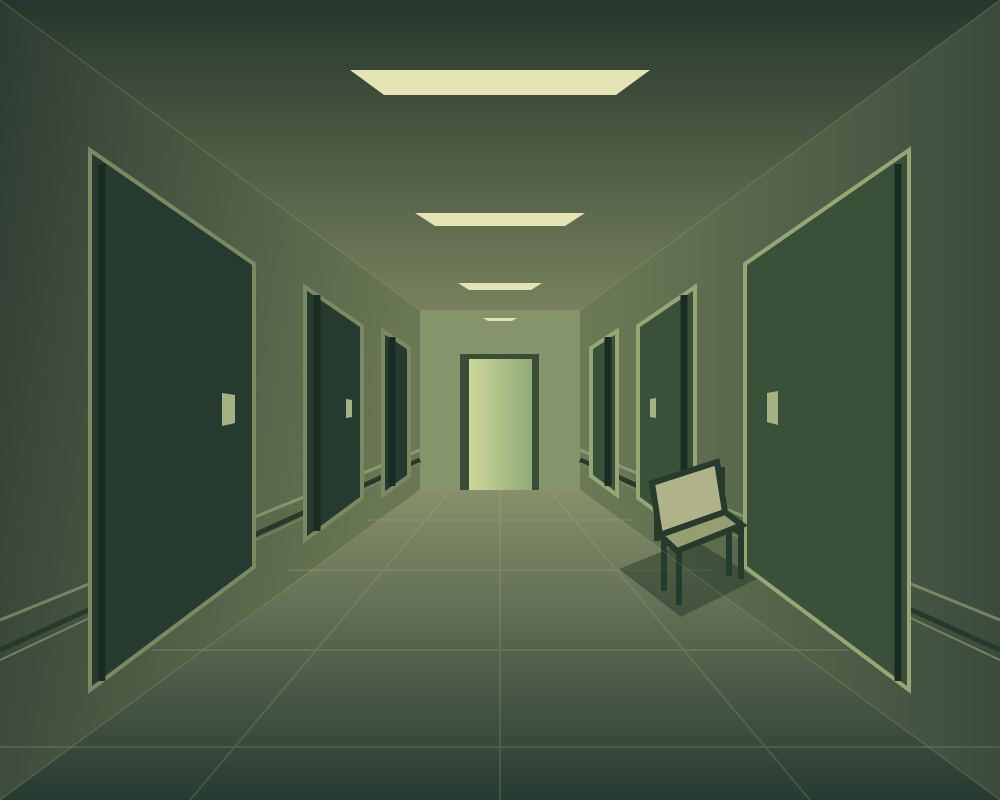
Composition diagram of an empty green corridor: repeated doorways converge on a small, bright doorway, with a single chair near the right edge.
01 — A place between placesOriginal composition diagram · not a photograph
LOOKING IS A PRACTICEEmpty space. Familiar shapes. A little uncertainty.

01 / THE VISUAL LANGUAGE

What makes a
space feel liminal?

Start with a place made for passing through. Then look for a moment when its usual activity has fallen away.

A corridor connects rooms. A waiting area exists because someone will arrive. A covered walkway takes you somewhere else. When those places are quiet, the purpose remains visible but the expected people are absent. That gap gives you a useful photographic question: what happens here when nothing is happening?

In this guide, “liminal” is a way of reading a frame: a familiar environment caught between uses, destinations or moments. An empty room alone is not a recipe. The image needs something to hold your attention: a light left on, a rhythm of doors, a chair facing nowhere, or a view that stops before it resolves.

You do not need darkness or a horror reference. Soft daylight can make an ordinary place feel just as unsettled. Begin with what is actually there.
FOUR THINGS TO NOTICE

Build a frame, one choice at a time.

OBSERVE → CHANGE → COMPARE
01

A threshold

Photograph the relation between here and there. Stand at a doorway and decide whether to include its frame. Keeping it suggests a place to enter; cropping it out can leave the route less certain.

Try: make one frame from each side of the same permitted doorway.

02

A repeating rhythm

Doors, ceiling lights and floor seams can lead the eye into the picture. Line up two edges first. Then notice where the rhythm breaks. That interruption often matters more than perfect symmetry.

Try: shift a hand’s width to the left and watch which edges stop overlapping.

03

A trace of use

One ordinary object can suggest a human routine without showing a person. A chair or a notice board gives the room a scale and a purpose. Include it deliberately; do not stage a false story about abandonment.

Try: compare a frame with the object against a tighter frame without it.

04

An unanswered edge

A hallway turning out of view gives less information than a fully visible destination. Use that uncertainty carefully. Leave enough context for a viewer to understand the place before asking them to wonder about it.

Try: make the hidden route occupy a small part of a calm, readable frame.

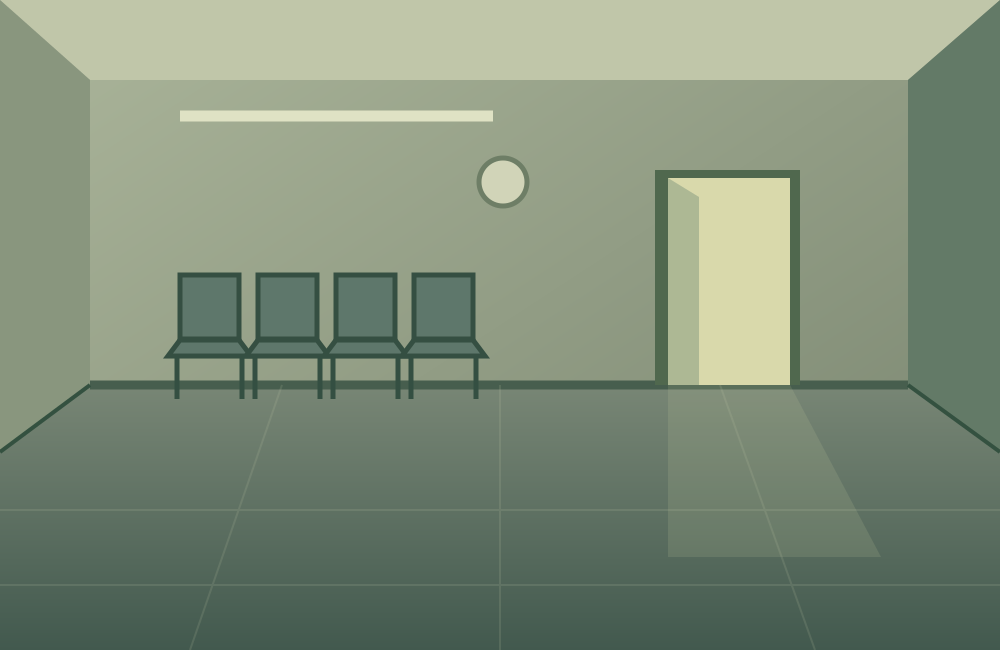
Composition diagram of a pale waiting room with four chairs, a bright doorway and a clock without hands.
Study 02 · Original composition diagram, not a photograph

READING A FRAME

The room is empty.
The routine isn’t.

The chairs still face the place where someone would be called. The open doorway promises a next room. The broad, unused floor makes the waiting visible.

Try covering the doorway with your hand. The scene becomes more closed and static. Now cover the chairs. It loses a clue about its everyday purpose. This is why selecting what stays in the frame matters more than adding a dramatic filter.

Try the three-frame exercise

MAKE YOUR FIRST SET

From looking to making.

Three short guides. One ordinary place.
Work through them at your own pace.