For this guide, use three questions: is the uncertainty in the place, in a dreamlike association, or in a deliberate visual contradiction?
This is an editorial framework for practising, not a set of fixed borders or a history of online communities. A single image can answer more than one question. “Dreamcore” and “weirdcore” are especially flexible labels; do not use this table to tell another maker that their work belongs in the wrong box.
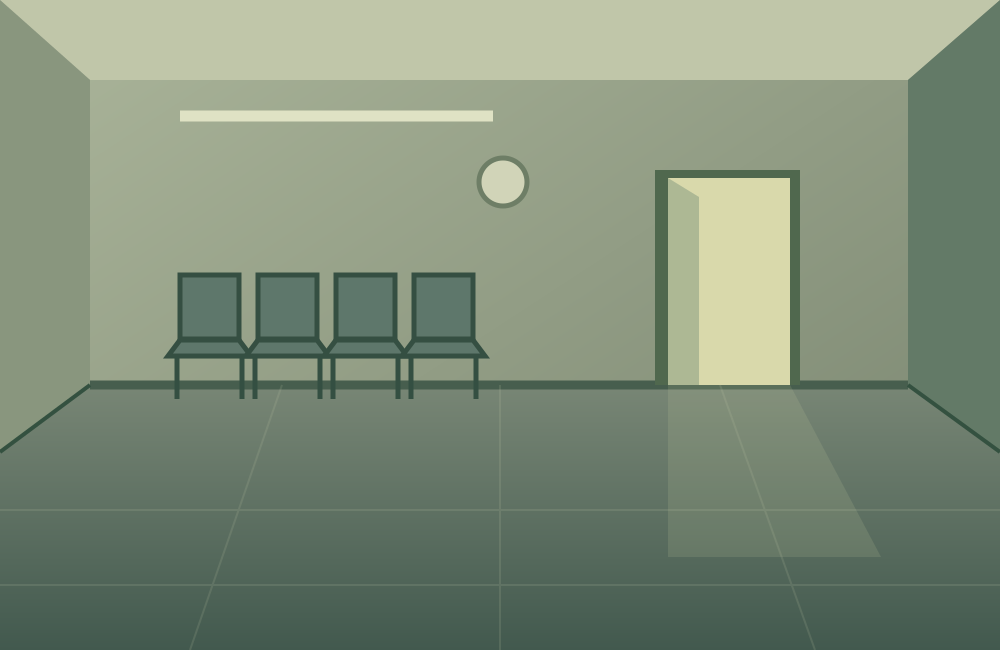
Original composition diagram · not a photograph
01 / THE PLACE
Liminal
“Why does this ordinary place feel between moments?”
Let the space carry the uncertainty. A familiar route remains legible, but its normal activity is missing. Repetition, quiet light and a threshold can do the work without invented objects.
Make it: photograph a permitted waiting area as it is. Keep the chairs and the onward route. Decide how much empty floor to include.
Check it: if the usual people returned, would the frame’s tension change? If yes, absence is doing useful work.
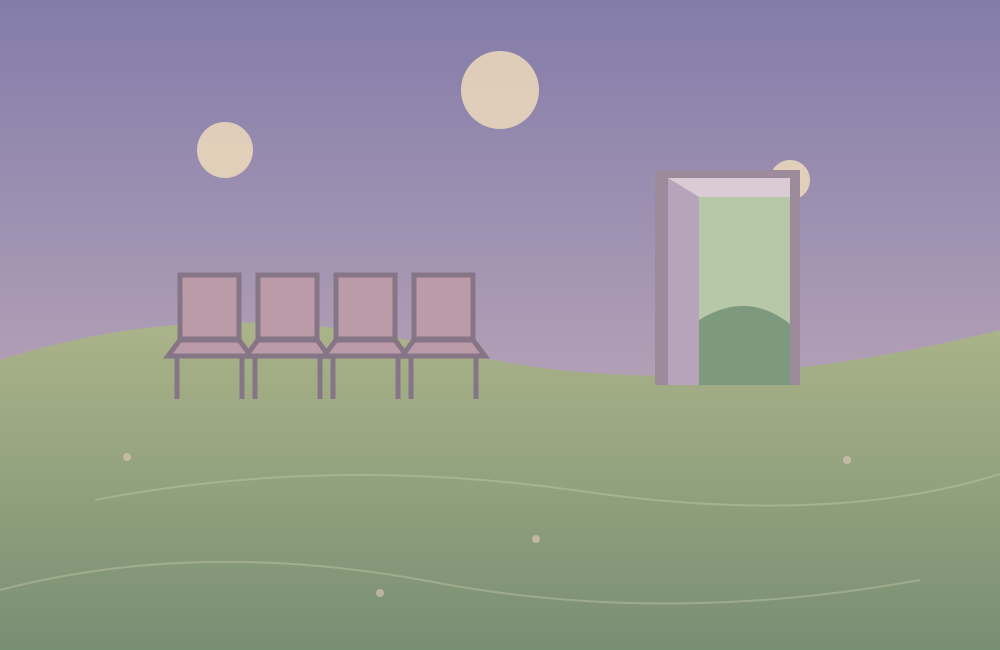
Original composition diagram · invented scene
02 / THE ASSOCIATION
Dreamcore
“Does this feel like a memory that cannot quite be placed?”
For our exercise, prioritise an associative, dreamlike feeling. Familiar shapes can sit in an impossible setting; soft colours or a loose sense of scale can make the room feel remembered rather than documented.
Make it: sketch the same chairs outdoors, or make your own clearly labelled composite using photographs you created. Choose one strange association.
Check it: can you name the connection between the objects, even if the connection is emotional rather than literal?
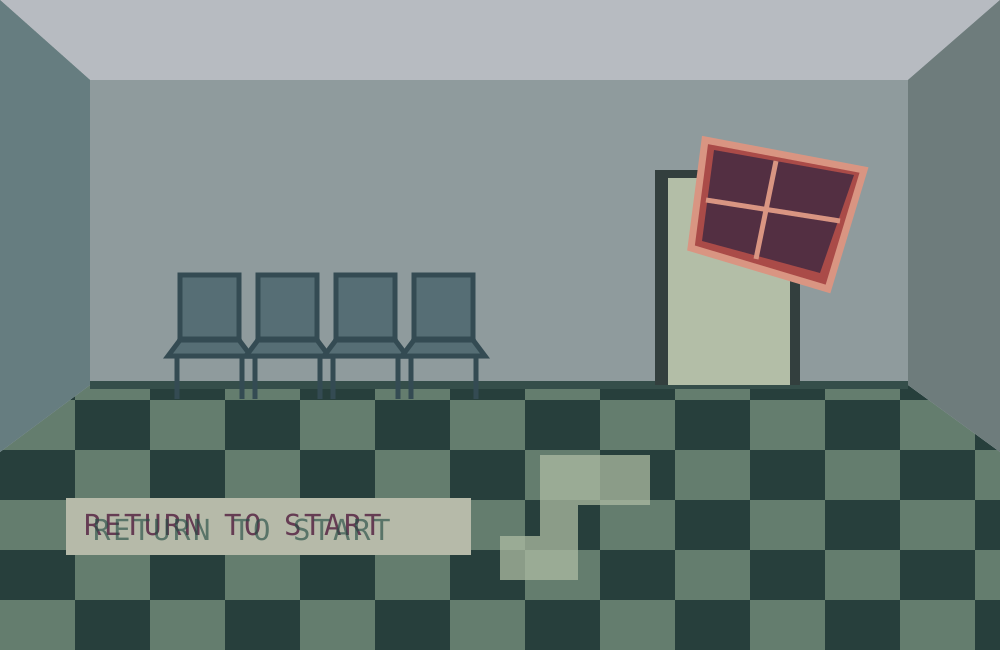
Original composition diagram · invented scene
03 / THE CONTRADICTION
Weirdcore
“Which visual rule is this image deliberately breaking?”
Here, emphasise a disruption the viewer can notice: a message with no clear speaker, conflicting scale, a broken perspective or an awkward digital overlay. The contradiction is an active part of the picture.
Make it: draw an impossible window over your own room sketch, then add a short original phrase whose meaning remains open.
Check it: does the disruption change how the viewer reads the room, or is it merely decoration?
KEEP THE INTENT CLEAR
Compare the decisions.
A practice framework, with deliberately overlapping categories
Decision
Liminal study
Dreamcore study
Weirdcore study
Main source of uncertainty
An ordinary place between uses
An associative or impossible scene
A visible contradiction or interruption
A useful first move
Wait for a permitted quiet moment
Connect two personal visual ideas
Break one rule on purpose
What to preserve
Clues to the place’s everyday function
A connection between the elements
Enough order to notice the disruption
A common weak result
Emptiness with no visual anchor
Soft colour with no association
Random additions competing equally
An honest caption
“Photograph; exposure and crop adjusted”
“Original composite from my photographs”
“Digital collage with original drawn elements”
A TEN-MINUTE DESK EXERCISE
Keep the room. Change the question.
Draw a rectangle for a room, three chairs and a door. For a liminal version, change only the framing: let the unused floor occupy more space. For a dreamcore version, keep the chairs but imagine a different world beyond the doorway. For a weirdcore version, restore the room and make just one feature contradict the rest.
Write one sentence beneath each sketch explaining the choice. If you cannot explain the difference without using the label itself, make another version. This exercise is about reading intentions, not generating a mood from a preset.
Use your own drawings and captures, or material whose licence allows your intended use. Recognising a popular image or character is not permission to reuse it. These studies use no Backrooms artwork or other franchise assets.